

Some schools ask for a video essay as part of the application: on a platform like Kira, a question appears on screen, you get a short preparation window, and the recording you make on the spot is what you submit.
The substance is the same as an interview. What you are asked, and what is being assessed, barely differ from a live conversation. But the format is different, and the preparation should change with it.
This piece is about two things. Getting your eyes level with the camera. And connecting memorised bullets out loud instead of reading a script.
Same substance as an interview; the difference is you cannot reshoot
First, there is no need to brace yourself unduly. The questions are close to the ones a live interview asks. Why an MBA, why this school, what you got wrong and how you put it right. The interview preparation in the previous piece carries over to a video essay unchanged.
Related articles:
What is different is that nobody is on the other side.
In a live interview, someone waits while you hesitate, and asks a follow-up when your point does not land. A recording offers neither. A silence stays a silence, a restart stays a restart. You talk alone, for a fixed length of time, at a screen that does not nod.
And the real attempt is essentially one take. Each question carries its own preparation time and answer time, and whether you may re-record at all varies by school. Many schools do provide an unlimited practice mode before the real thing, but the details differ. Read your own school's instructions before you start preparing.
The reason schools use a video essay in the first place is to see what the written file cannot show: your English when you speak it, your face, how you handle a pause. That is a different axis from the quality of your prose, which is exactly why a finished essay read aloud to camera does not score.
Nobody helps you, and you cannot reshoot. Those two facts are why a video essay rewards more careful preparation than a live interview does. Turned around, it is a format that gives preparation straight back to you.
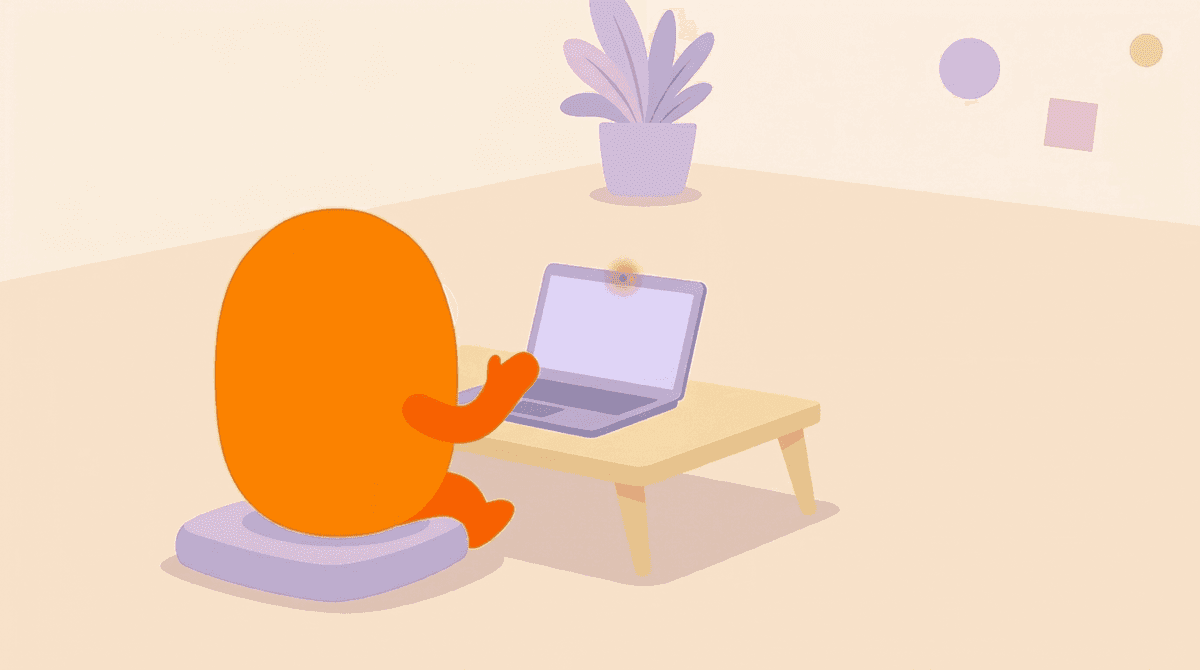
Get your eyes level with the camera — just buy the stand
Deal with the equipment first. This part is solved by shopping, which makes it the best return on effort in the whole process.
Put a laptop flat on a desk and its camera sits around chest height. Record from there and you get a downward angle that makes a feature of your chin. Above all, your eyes never meet the viewer's.
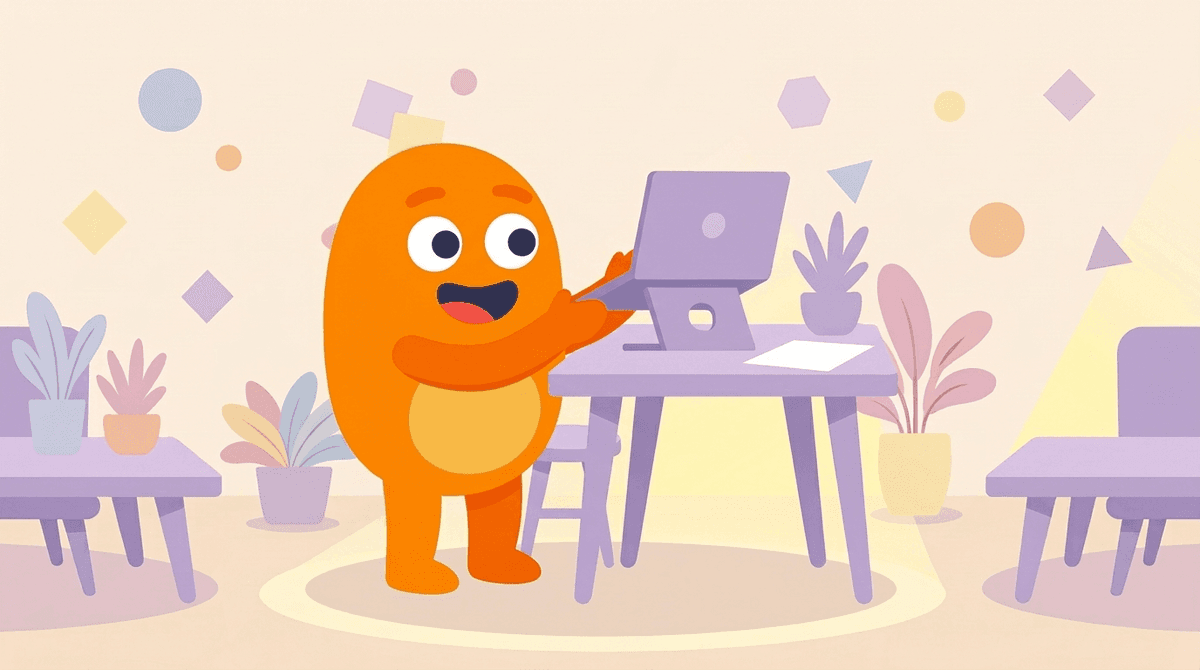
The fix is simply to raise the laptop until the camera is at eye level. A stack of books works, but you will redo the fine adjustment every time. Buying a laptop stand is faster, and it need not be expensive. You will use it repeatedly through the application season, and now that online interviews are normal, you will keep using it long after you enrol.
Once the height is right, decide where to look. Not at your own face on the screen, nor at the question being displayed, but at the lens. Look at the middle of the screen and the recording shows someone glancing slightly downward. A small marker stuck next to the lens helps you hold the habit.
After height comes framing. Too close and your face fills the frame; too far and the room becomes the subject. From the chest up is the standard. Sit so your body is centred, and settle the chair position in advance so you are not leaning in or sinking back mid-recording.
That leaves light and background. Light from the front; a window behind you turns your face into a silhouette. A plain wall is the ideal background, and failing that, pick an uncluttered corner. For sound, a laptop's built-in microphone is enough in a quiet room.
All of this takes under an hour. When you are done, record once and watch it yourself. Eye level is the fastest thing to correct once you have seen your own footage.
Reading from a script is not a good idea
With the setup finished, on to the substance.
Taping a script beside the screen and reading it is one approach, and people do it.
I would not recommend it, though, for one simple reason: your eyes follow the text.
Reading moves your gaze sideways. It reduces blinking. It gives your delivery the cadence of reading rather than speaking. In person you might get away with some of that; on a recording where your face fills the frame it is remarkably obvious. And the person watching is going through dozens of answers to the same question in a row. Someone reading looks like someone reading.
To be clear, writing the script is useful. Putting what you want to say into sentences exposes missing logic and a bad order. The problem is not writing it; it is reading it out on the day. Treat the script as the draft you will turn into the bullets described next.
There is also a practical weakness. A script is hard to recover from. Reading is a single track, so once you lose your place there is nowhere to rejoin, and the seconds your eyes spend hunting off-camera stay in the footage.
Memorise bullets, not sentences
So what should you do instead? Memorise.
The previous piece on live interviews said not to memorise your answers word for word. For a video essay I recommend the opposite. But what you memorise is different.
You do not memorise sentences. You memorise the bullets for each passage.
The procedure is this. For each question, split what you want to say into three to five chunks. Write down one keyword or short phrase for each chunk. Not a sentence — a word, or at most a few words. What you memorise is only that sequence and its order.
For "why an MBA," that might be: where your current job stalls, the specific moment you noticed it, the capability you lack, what the two years fill in, where you use it afterwards. Five items are all you write down; how to phrase each one is decided live.
Memorise it word for word and one stumble stops everything. Memorise only the sequence and a stumble costs you nothing — you rephrase on the spot and move to the next keyword. Slightly different wording each time is fine. It actually sounds more like someone thinking.
With the sequence learned, the real work starts: practise out loud, connecting one bullet to the next. You can hold the keywords in your head, but the words that bridge them only arrive once you have said them. Run the same sequence repeatedly, phrasing it differently each time. When the connective language comes out naturally, that passage is finished.
Recording your practice and reviewing it works exactly as the previous piece describes. For a video essay, though, record video rather than audio. That way you check your eye line and your bridges at the same time.
A format that gives preparation straight back
To summarise.
The substance of a video essay matches an interview, so your interview preparation transfers directly. What differs is that nobody helps you and you cannot reshoot. Which is precisely why whatever you prepared shows up on the recording.
Three things to do. Buy a stand and bring the camera to eye level. Do not read a script. Memorise bullets rather than sentences, and practise bridging them out loud.
Unlike a live interview, a video essay has almost no luck in it. Rapport does not matter; whether the conversation flows does not matter. The state you prepared is the state you submit. For anyone willing to prepare, that is a format worth having.
Use Gradigo to manage your application progress. Work backward from the video essay deadline and clear the tasks one at a time.


